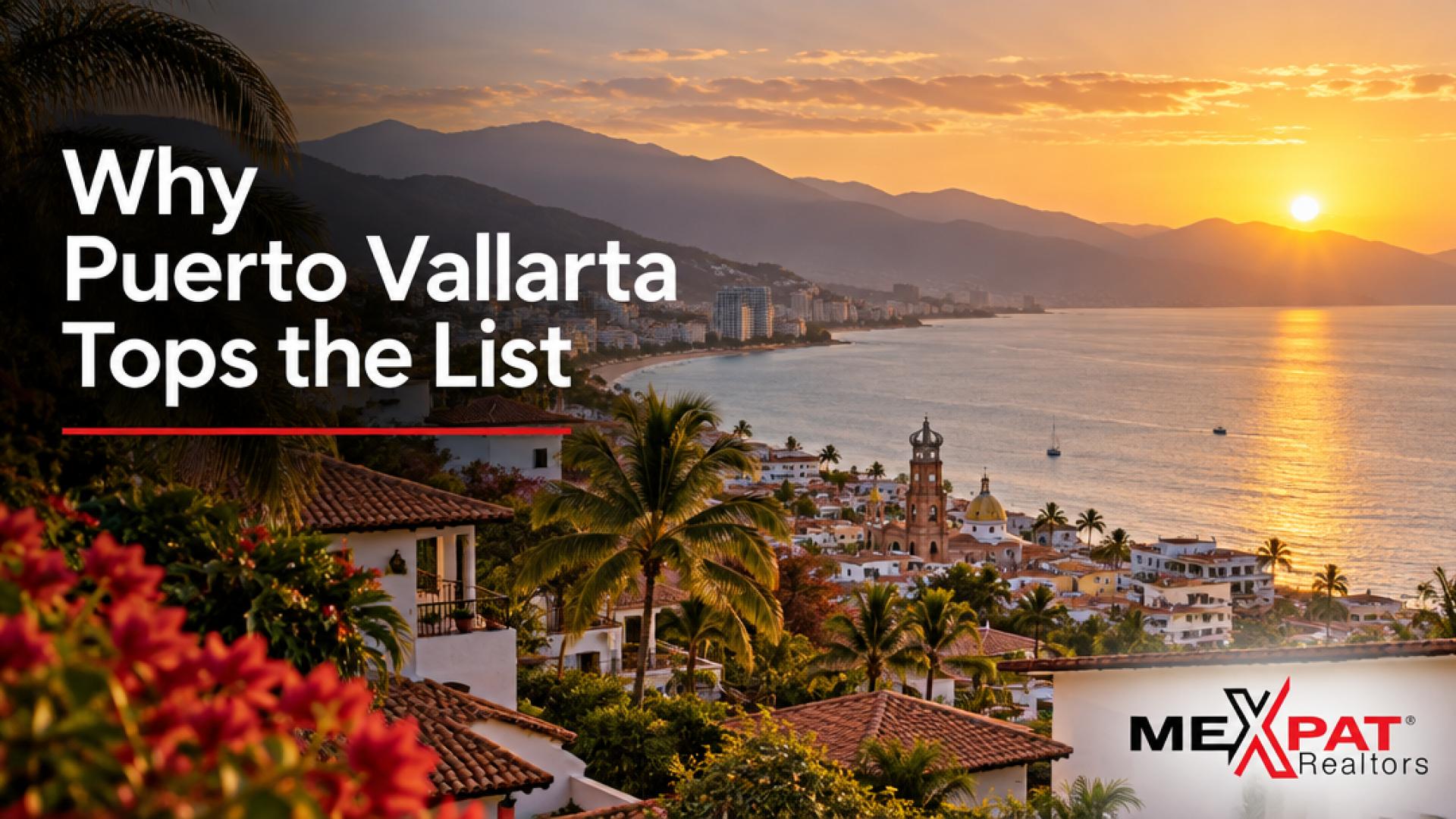
Best Places to Live in Mexico for Retirees: Why Puerto Vallarta Tops the List
Retiring abroad is a big decision, and the first question almost always sounds the same: where? Mexico keeps rising to the top for U.S. and Canadian retirees, and once people start comparing the options seriously, one destination tends to pull ahead of the rest. For a long list of practical reasons, Puerto Vallarta has become the answer for thousands of foreign retirees who wanted sunshine, community, healthcare within reach, and a real city rather than a resort bubble.
This guide walks through what most retirees actually compare, how Puerto Vallarta stacks up against Mexico’s other well-known retirement destinations, which neighborhoods make sense at different stages of life, and what it takes to settle in legally, financially, and emotionally.
What Retirees Actually Compare
Before looking at specific places, it helps to know what tends to decide the outcome. In our experience working with foreign buyers along Bahía de Banderas, these are the factors that matter most:
- Climate — not just warmth, but humidity, rainy season intensity, and whether you can be outdoors comfortably year-round.
- Healthcare access — private hospitals and specialists nearby, pharmacy access, and proximity to a major airport for care or family visits back home.
- Cost of living — housing, utilities, groceries, dining, and household help, weighed against the lifestyle you want.
- Community — an established English-speaking expat network, clubs, volunteering, faith communities, and the chance to make friends quickly.
- Walkability and infrastructure — sidewalks, transit, roads, water reliability, internet quality.
- Property ownership rules — how foreigners can hold title, and what ongoing costs and obligations look like.
- Air connections — direct flights to the U.S. and Canada make a huge difference when grandchildren or aging parents are part of the picture.
Any one of these can disqualify a destination. Very few places do well on all of them. That’s the core of Puerto Vallarta’s case.
How Puerto Vallarta Compares to Other Favorites
Lake Chapala and Ajijic offer the largest established retiree community in Mexico, mild highland weather, and a genuinely low cost of living. The trade-offs are a smaller local economy, limited direct flights (most people drive to Guadalajara), and cooler evenings than beach lovers expect.
San Miguel de Allende is beautiful, cultural, and walkable, with a thriving expat scene. It’s also inland, increasingly expensive in the most desirable colonial core, and dependent on connections through León or Querétaro for air travel.
Mérida wins on safety, culture, and value, and it has strong healthcare for a city its size. The heat and humidity are serious for many retirees, and the Gulf coast is a drive away rather than at your doorstep.
Los Cabos delivers resort-quality living and easy flights, with a much higher cost of living and a more transient, resort-driven feel in many communities.
Puerto Vallarta sits in an unusual sweet spot: a real, working city with a historic center, an international airport with direct service across North America, a large bilingual expat community, private hospital care, a walkable core, and a bay that offers everything from city condos to gated beachfront communities. It’s also on the same bay as Bucerías, La Cruz de Huanacaxtle, and Nuevo Vallarta in Nayarit, so retirees aren’t limited to one town — they can choose city energy, village calm, or resort-style amenities without leaving the region.
Why Puerto Vallarta Tops the List
A city, not a resort corridor
The Malecón, the Zona Romántica, Centro, and the markets and plazas that surround them are lived-in year-round. Retirees here tend to describe their weeks in terms of Spanish classes, gallery walks, morning swims, and dinners with friends rather than shuttle buses between resorts.
Genuine walkability
If you choose the right neighborhood, you can shop, eat, see a doctor, and meet friends on foot. For retirees who don’t want to own a car — or who want to give up night driving — that changes daily life more than any other single factor.
Direct air access
Puerto Vallarta’s international airport (PVR) has direct flights to a wide range of U.S. and Canadian cities. Being a few hours from home matters when family needs you, and it makes short visits from children and grandchildren realistic.
Healthcare within reach
The metro area has private hospitals, clinics, laboratories, and English-speaking specialists, plus dental and diagnostic services that many retirees find both accessible and affordable. Most foreign retirees pair private health insurance with pay-as-you-go private care; Mexican public health programs are a separate question and should be reviewed with a local advisor for your residency category.
An established, welcoming community
There’s a long-standing expat ecosystem here — social groups, charity organizations, classes, pickleball and tennis, church communities, and informal networks that help newcomers get oriented in weeks rather than years. When people say Puerto Vallarta is easy to settle into, this is a large part of why.
Ownership rules you can plan around
Foreigners can own property anywhere in Mexico, but within the restricted zone — roughly 50 km from the coast and 100 km from international borders — residential property is typically held through a bank trust (fideicomiso) or a Mexican corporation. Puerto Vallarta’s professional infrastructure for this is mature: title searches, notaries, and trust administration are routine here. Our buyer representation team walks foreign buyers through documentation, due diligence, and closing.
Lifestyle range within one bay
City condo in Versalles or the Zona Romántica. A house in Fluvial or Marina Vallarta with a pool. A gated beachfront community in Nuevo Vallarta. A small town like Bucerías or La Cruz de Huanacaxtle. The bay lets you change your mind later without leaving your social circle.
Neighborhoods Retirees Gravitate Toward
- Zona Romántica and Centro — walkable, lively, historic; best for retirees who want restaurants and culture on foot and don’t mind some street noise.
- Versalles and Fluvial — residential, flat, close to services, popular with full-time residents.
- Marina Vallarta — golf, marina life, gated security, and easy airport access.
- Conchas Chinas and Amapas — hillside views and privacy; steps and slopes are a real consideration.
- Nuevo Vallarta — newer construction, resort amenities, and a quieter gated pace.
- Bucerías, La Cruz, and San Pancho — village life north of the airport, with strong communities and a slower rhythm.
A useful discipline: rent for a season before you buy. A neighborhood that feels perfect on a two-week vacation can feel different in September humidity or high season traffic.
The Practical Side of Settling In
- Residency. Temporary and permanent residency are applied for through Mexico’s immigration system, generally supported by income or savings documentation. Requirements and thresholds change, so confirm current rules with a local facilitator or consulate before you plan around them.
- Banking and taxes. Most retirees open a Mexican bank account for utilities and household expenses, and get advice on how Mexican tax residency and reporting apply to their situation.
- Ongoing property costs. Budget for property tax (predial), HOA fees, trust fees where applicable, insurance, and maintenance. If you’ll be away for months, account for care of the home — our property management service exists precisely for that gap.
- Rental income. If you plan to rent the property when you’re not using it, the numbers work best when the rental is set up properly from the start. Our rental facilitation service covers marketing, listings, guest handling, and local tax filing.
Common Questions
Do I need to speak Spanish? No, but learning some changes your experience. In the Zona Romántica and Marina you can manage in English; in residential neighborhoods and small towns, basic Spanish opens doors.
Is Puerto Vallarta safe? It’s a busy tourist city with normal urban precautions. Retirees here generally report feeling safe walking, dining, and living in the areas they know, and most adjust their habits — as they would in any city — rather than their plans.
Can I own property outright as a foreigner? Within the restricted zone, residential property is generally held via a bank trust or Mexican corporation. Outside the restricted zone, direct ownership is possible. Your specific case should be reviewed with a local notary and attorney.
When is the best time to visit before deciding? Visit in both high season (November–April, dry and busy) and green season (summer and early fall, greener, quieter, humid). Seeing both tells you more than any brochure.
It All Starts With a Conversation
Choosing where to retire is really a series of small, answerable questions: which neighborhood fits your mobility, what your budget buys, how the paperwork works, and who will look after the house when you’re away. Those are exactly the conversations we have every week.
If Puerto Vallarta is on your shortlist — or you want help comparing it honestly against Lake Chapala, San Miguel, or Mérida — tell us what you’re picturing, and we’ll help you turn it into a plan.